You ask your coach about your backhand. You ask about your serve toss. You ask about footwork, grip, and whether you should switch to a semi-western forehand. But here's the question most players never think to ask: How often should I actually be taking these lessons?
It sounds almost too simple to matter. But in my experience working with players at every level, lesson frequency is one of the single biggest levers you can pull to accelerate — or accidentally stall — your improvement. Get it wrong in either direction, and you're essentially leaving progress on the table.
Let's fix that.
The Science of Skill Acquisition: How Repetition and Rest Actually Work
Motor learning research is pretty clear on something that surprises a lot of players: you don't actually get better during a lesson. You get better after it.
When you're on court learning a new stroke pattern, your nervous system is taking notes. But the actual consolidation — where that movement pattern gets encoded into long-term motor memory — happens during rest and sleep in the hours and days that follow. This is called the consolidation phase, and skipping it by piling on another lesson too quickly is a bit like taking notes in class and then immediately erasing them before the exam.
Why More Lessons Don't Always Mean Faster Progress
This is the trap I see ambitious players fall into constantly. They book lessons three or four times a week, back to back, and wonder why they're not improving faster. The problem isn't effort — it's timing.
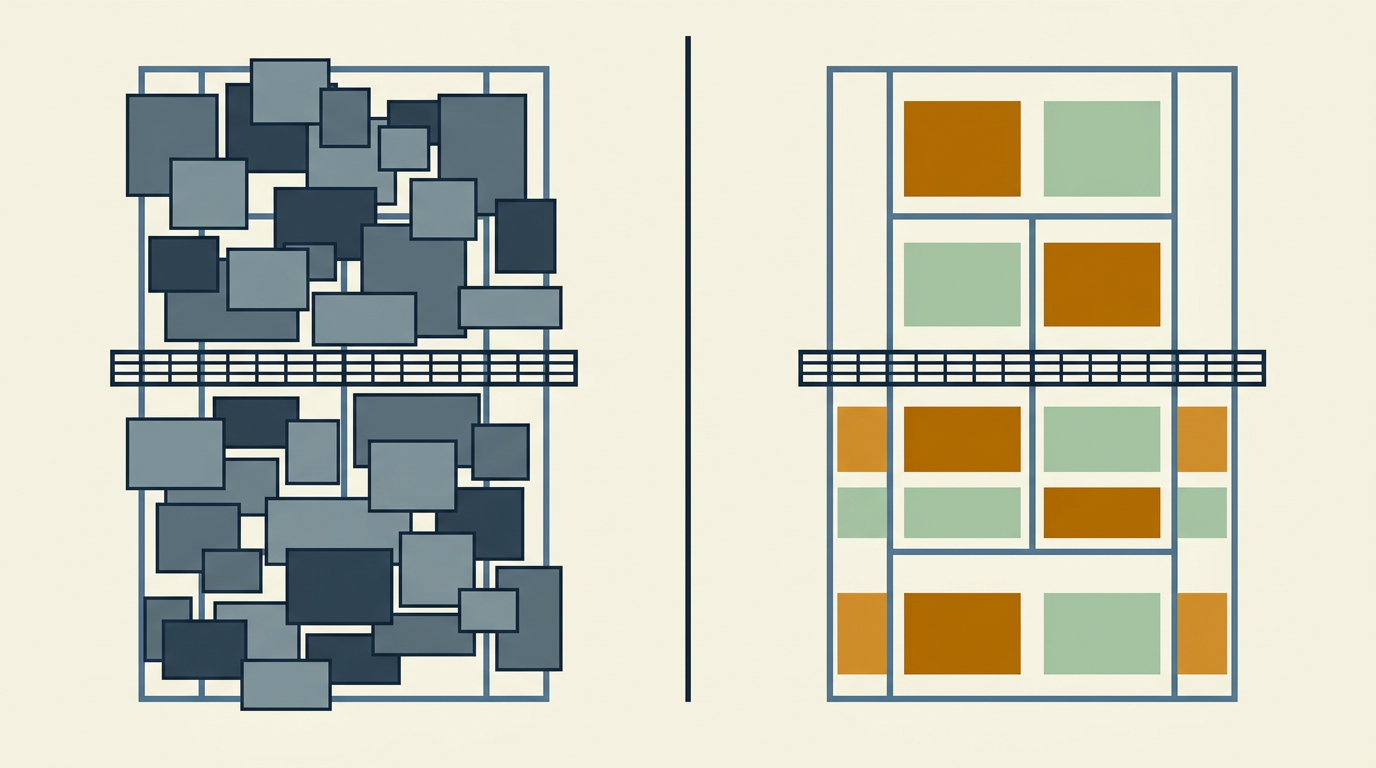
When you take lessons too frequently without adequate independent practice in between, each session essentially competes with the last. Your coach introduces a new grip adjustment on Tuesday, and by Thursday's lesson, you haven't had enough reps to stabilize it. So Thursday's lesson either retreads the same ground or introduces another new variable on top of an unstable foundation. You end up with a messy stack of half-learned changes rather than one solid, reliable technique.
The Role of Independent Practice Between Sessions
The USTA and PTR both emphasize that practice time between coached sessions is where real skill development happens. A coach's job is to diagnose, correct, and guide — but the repetition required to actually groove a new movement pattern? That's your job, between lessons, with a ball machine or a hitting partner.
And this changes how you should think about lesson frequency entirely. It's not just "how often should I see my coach" — it's "how much time do I have to practice between sessions?"
Recommended Lesson Frequency by Player Goal and Level
Here's the framework I'd give any player who asked me this question directly. These aren't arbitrary numbers — they're built around what motor learning research actually supports.
Complete Beginners: Building a Foundation
Recommended frequency: 1-2 lessons per week, for the first 2-3 months
If you're brand new to tennis, your first priority is building basic movement patterns that feel natural rather than forced. One to two lessons per week gives you enough input to make real progress, while leaving room for the consolidation that makes those patterns stick.
Between lessons, even 20-30 minutes of wall hitting or shadow swings at home makes a significant difference. You're not trying to be creative here — just repeating what your coach showed you, exactly as they showed it.
(If you're not sure whether to start with private or group lessons, the comparison in group tennis lessons vs. private lessons is worth reading before you commit to a schedule.)
Intermediate Players Breaking Through a Plateau
Recommended frequency: 1 lesson per week + 2-3 independent practice sessions
This is where the "more is more" instinct gets players into trouble. Intermediate players often feel stuck and respond by booking more lessons. But the real issue is usually insufficient practice between sessions, not insufficient coaching.
One solid lesson per week, combined with two or three practice sessions where you're deliberately working on what your coach prescribed, is almost always more effective than two lessons with no structured practice in between. The lesson identifies the problem. Practice is where you solve it.
If you're also thinking about whether your investment is paying off, it's worth calculating whether the total cost of tennis coaching is justified by your improvement rate — because at this stage, the math can get murky fast.
Competitive Players Preparing for Tournaments
Recommended frequency: 2-3 lessons per week, with high-volume hitting in between
For players competing at the USTA league or tournament level, the calculus shifts. You're not just learning new techniques — you're refining existing ones under pressure, developing tactical patterns, and building match-specific fitness and confidence.
At this level, more frequent coaching contact makes sense, but only because the practice volume between sessions is also high. A competitive player might hit with a partner four or five days a week. Two or three lessons per week fits naturally into that schedule without crowding out the repetition time.
If you have junior players in the family heading toward USTA competition, the coaching demands are different again — and the article on junior tennis coaching and USTA prep covers that specific path in detail.
Recreational Adults Playing for Fitness and Fun
Recommended frequency: 1 lesson every 1-2 weeks
Honestly? This is the most common player type, and the most underserved by generic advice. If you're playing tennis for enjoyment, social connection, and fitness — not to compete — then one lesson every week or two is perfectly appropriate.
You don't need to maximize your improvement rate. You need to enjoy your time on court while getting gradually better. A bi-weekly lesson with a couple of casual hitting sessions in between is a completely valid and sustainable schedule. Don't let anyone make you feel like you're not "serious enough" about it.
What to Do Between Lessons to Maximize Each Session's Value
The 48-Hour Rule for Reinforcing New Technique
Here's a principle I've seen validated again and again: the 48 hours after a lesson are your highest-leverage practice window. This is when your motor memory is most receptive to reinforcement. A focused 30-minute session within two days of your lesson — even just hitting against a wall or using a ball machine — can dramatically accelerate how quickly the new technique becomes automatic.
After 72+ hours without practice, that window starts to close. You're not back to zero, but you're working harder in the next lesson to recover ground you didn't need to lose.
Solo Drills That Extend Your Coaching Investment
You don't need a hitting partner to get quality reps. A few options that work well:
- Ball machine sessions focused on one specific technique your coach corrected
- Wall hitting for groundstroke rhythm and consistency (underrated and free)
- Shadow swings at home to rehearse the correct movement pattern without a ball
- Video review of your own strokes using your phone — Tennis Abstract and similar resources can help you benchmark what good technique looks like
The goal isn't to be creative. It's to repeat the specific thing your coach asked you to work on, as many times as possible, before your next session.
Signs You're Taking Lessons Too Frequently (Or Not Enough)
You might be taking lessons too frequently if:
- Your coach keeps correcting the same thing session after session
- You feel overwhelmed by the number of things you're trying to change
- You're not hitting between lessons at all
- Your improvement feels slow despite heavy investment
You might not be taking lessons frequently enough if:
- You notice your technique reverting to old habits between sessions
- Each lesson feels like starting over rather than building on the last
- You've been working on the same fundamental issue for more than six months with no progress
- You're developing a compensation pattern (like an arm-driven serve to compensate for poor toss mechanics) that your coach hasn't seen
Before/After Lesson Frequency Comparison:
| Approach | What Happens | Outcome |
|---|---|---|
| Too frequent, no practice | Coach corrects → no reps → same correction next week | Slow progress, frustrated player |
| Right frequency + practice | Coach corrects → player reinforces → next lesson builds forward | Consistent, compounding improvement |
| Too infrequent | Long gaps between sessions → technique reverts → restart each time | Plateau, wasted investment |
| Right frequency, wrong focus | Lessons happen but no deliberate practice of prescribed drills | Marginal improvement despite effort |
How to Build a Realistic Lesson Schedule Around a Busy Adult Life
Look, most adult players aren't full-time athletes. You've got work, family, and approximately seventeen other commitments competing for your time. So here's how to build a schedule that's actually sustainable.
Step 1: Decide your practice floor, not your ceiling. How many times per week can you reliably get on a court — not on a perfect week, but on a normal one? Start there.
Step 2: Protect at least one practice session per lesson. If you can only practice once between lessons, schedule your lesson accordingly — every 10-14 days rather than every week. One lesson with one practice session beats two lessons with zero.
Step 3: Use group formats to fill the gap affordably. If private lessons are stretching your budget, group tennis lesson formats can provide coached time at lower cost, letting you space out private sessions while maintaining court time.
Step 4: Tell your coach your actual schedule. This sounds obvious, but most players don't do it. Your coach can structure lesson content very differently knowing you'll have four practice sessions before the next lesson versus zero. Give them that information and let them help you find a tennis coach and build a lesson schedule that fits your goals.
The True Cost of Infrequent Lessons: When Gaps Erase Progress
Here's the part nobody likes to hear. If you're taking lessons once a month or less — especially as a beginner or intermediate player — you're very likely spending money to tread water.
Skill regression is real. Motor patterns that haven't been reinforced through practice and coaching contact will decay. Not completely, and not instantly. But a beginner who takes a lesson in January and the next in March is probably starting almost from scratch in March. That's not an efficient use of money or time.
The minimum effective dose for most players is roughly one lesson per two weeks, with at least one or two practice sessions in between. Below that threshold, you're fighting regression more than building skill.
And when you zoom out and think about the total money you're spending on lessons over months or years, the frequency question becomes a financial one too. A poorly spaced lesson schedule doesn't just slow your progress — it actively reduces the return on every dollar you invest. That's exactly why calculating whether the total cost of tennis coaching is justified by your improvement rate is such a worthwhile exercise.
Build Your Schedule With Intention
The players I've seen improve fastest aren't always the ones taking the most lessons. They're the ones who treat each lesson as a prescription and then actually fill it — showing up between sessions, doing the work, and coming back ready to build on what they've already consolidated.
So before you book your next lesson, ask yourself: when am I going to practice what I learned in the last one? Answer that question first, and your lesson frequency will almost answer itself.
When you're ready to get intentional about your schedule, find a tennis coach and build a lesson schedule that fits your goals — because the right frequency, matched to your life and your level, is where real progress begins.